Period underwear typically holds 5–50 ml or more, depending on its absorbent construction, gusset coverage, and design. Actual capacity varies by style, and laboratory testing is essential for verifying leak resistance.
For underwear brands, retailers, and private-label buyers, absorbency capacity is one of the most important product specifications when developing a menstrual underwear collection. However, a higher milliliter rating does not automatically mean better performance. Liquid retention, absorption speed, leakage resistance, fabric comfort, and coverage all influence the final product experience.
This guide explains common absorbency levels, compares different capacity ranges, and examines actual test results from CHUANGRONG Apparel to help buyers make more informed product development decisions.
How Many Milliliters Can Period Underwear Hold?
Most period underwear products are positioned within an approximate range of 5–50 ml, although some specialized designs may claim higher capacities. The actual amount depends on the absorbent core, fabric combination, gusset dimensions, and the testing method used.
For product development purposes, buyers can use the following general absorbency categories as an initial reference:
| Absorbency Level | Approximate Capacity | Typical Use Scenario |
|---|---|---|
| Very Light | 5 ml | Spotting and very light flow |
| Light | 10–15 ml | Light menstrual days and backup protection |
| Moderate | 20–30 ml | Regular menstrual flow |
| Heavy | 40–50 ml | Heavier menstrual days |
| Super-Heavy | 50 ml+ | High-capacity product designs, subject to testing |
These ranges are product-positioning references rather than universal industry standards. Different manufacturers may use different capacity classifications and test procedures. Buyers should always request test data for the specific product being sourced.
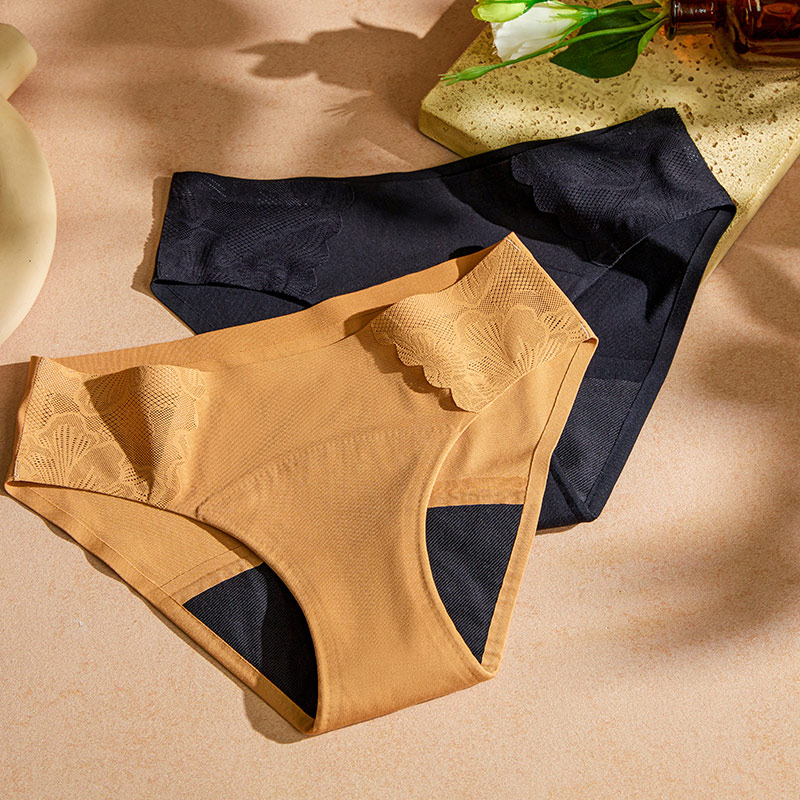
CHUANGRONG's Period Panties Collection covers light, medium, and heavy/overnight absorbency development, with different constructions available for brand customization.
What Is the Difference Between 5ml, 10ml, 15ml, and 20ml Absorbency?
For brands developing period underwear, the difference between 5 ml and 20 ml is not simply the amount of liquid absorbed. It also affects the required absorbent material, gusset thickness, product positioning, and overall wearing experience.
The following table provides an illustrative product-development reference for different capacity targets. The layer structures are suggested construction directions, not confirmed specifications or tested capacities for individual CHUANGRONG products.
| Target Capacity | Flow Scenario | Suggested Layer Structure | Product Development Focus |
|---|---|---|---|
| 5 ml | Spotting / Very Light | 2–3 functional layers | Thin profile, lightweight feel, discreet protection |
| 10 ml | Light Flow | 3–4 functional layers | Moisture management and comfortable daily wear |
| 15 ml | Light to Moderate Flow | 3–4 functional layers | Improved liquid retention and balanced thickness |
| 20 ml | Moderate Flow | 4 functional layers | Higher absorbent capacity and reliable leakage resistance |
Layer count alone does not determine absorbency. The material composition, fabric weight, absorbent surface area, bonding process, and liquid distribution all influence performance.
For example, adding more layers without optimizing material selection may make the gusset unnecessarily thick without delivering a proportional improvement in absorbency.
When developing a new collection, brands should evaluate both liquid capacity and the comfort of the finished garment. A product that absorbs more but feels bulky may not meet the expectations of consumers who prioritize discreet everyday wear.
What Do Real Factory Absorbency Test Results Show?
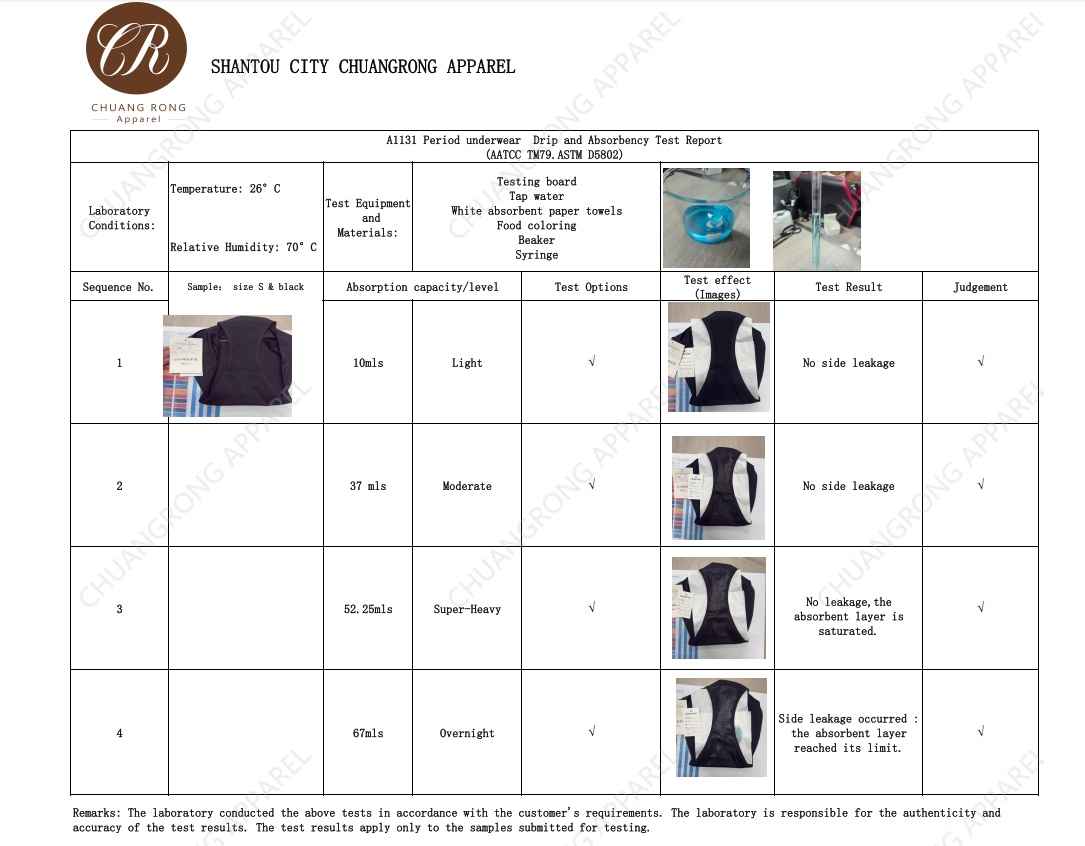
Report Source: This report is from CHUANGRONG Apparel's internal testing records. Test results apply only to the submitted samples and the specified testing conditions.
Actual laboratory results provide a more useful reference than marketing claims alone. CHUANGRONG Apparel has an internal A1131 Period Underwear Drip and Absorbency Test Report documenting four liquid application levels on one submitted sample.
The report identifies the tested sample as black period underwear in size S. Its recorded results are summarized below.
| Tested Liquid Volume | Recorded Absorbency Level | Observed Result | Interpretation |
|---|---|---|---|
| 10 ml | Light | No side leakage | Passed this test point |
| 37 ml | Moderate | No side leakage | Passed this test point |
| 52.25 ml | Super-Heavy | No leakage; absorbent layer saturated | Reached saturation without observed leakage |
| 67 ml | Overnight | Side leakage occurred; absorbent layer reached its limit | Exceeded the observed retention limit |
One important finding is that the sample showed no visible side leakage at 52.25 ml, even though its absorbent layer was already saturated. At 67 ml, side leakage occurred.
This distinction matters when evaluating product capacity. The maximum amount of liquid applied during a test should not automatically be advertised as the safe working capacity of the underwear.
Test report source: A1131 Period Underwear Drip and Absorbency Test Report, issued by the CHUANGRONG laboratory, dated July 2, 2026, page 1.
How Is Period Underwear Absorbency Tested?
Absorbency testing evaluates how much liquid a garment can take in, retain, and contain before visible leakage occurs. A meaningful test should identify the tested garment, liquid type, application procedure, environmental conditions, and the observed result.
The CHUANGRONG A1131 report references AATCC TM79 and ASTM D5802 and records the following test setup:
| Test Parameter | Information Recorded in the Report |
|---|---|
| Tested Product | A1131 period underwear, black, size S |
| Test References | AATCC TM79 and ASTM D5802 |
| Test Liquid | Tap water with food coloring |
| Application Equipment | Syringe and beaker |
| Test Surface | Testing board |
| Leakage Observation | White absorbent paper towels |
| Recorded Temperature | 26°C |
| Recorded Relative Humidity | 70°C as printed in the report; the unit requires confirmation |
| Report Date | July 2, 2026 |
The report describes the results as applying only to the submitted samples. It also states that the laboratory conducted the tests according to customer requirements and is responsible for the authenticity and accuracy of the reported results.
For a more reproducible product evaluation, buyers should request additional information, including:
- Liquid application procedure: The volume added at each stage, application location, and interval between applications.
- Absorption and retention: Whether the liquid remains inside the absorbent core or spreads toward the edges.
- Leakage criteria: Whether side leakage, bottom leakage, or visible transfer to an external absorbent surface is recorded.
- Sample and size information: The garment style, size, fabric composition, and gusset dimensions.
- Repeatability: The number of samples tested and whether results are consistent across multiple specimens.
These details help brands distinguish between a single-sample internal evaluation and a more comprehensive product validation program.
How Does the Number of Absorbent Layers Affect Capacity?
Period underwear generally combines several functional materials within the gusset area. Each layer has a different role, and their interaction determines the overall absorbency and leakage performance.
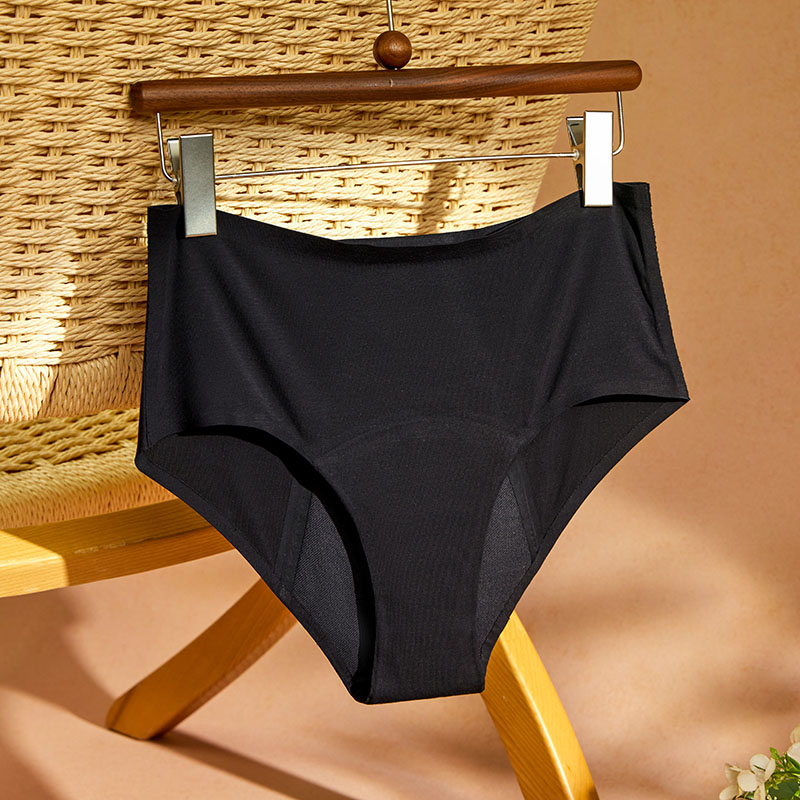
A common four-layer construction can be developed around the following functional arrangement:
| Layer | Function | Key Consideration |
|---|---|---|
| First Layer: Skin-Contact Layer | Allows liquid to move away from the skin surface | Softness, moisture transfer, and skin comfort |
| Second Layer: Distribution Layer | Helps distribute liquid across the absorbent area | Liquid spreading and absorption speed |
| Third Layer: Absorbent Core | Retains the majority of the absorbed liquid | Material composition and retention capacity |
| Fourth Layer: Leak-Resistant Barrier | Helps prevent liquid from passing through the garment | Barrier performance, flexibility, and breathability |
Not every period underwear product uses exactly four layers. Some designs combine functions into fewer layers, while heavier-absorbency products may use additional material or extended gusset coverage.
CHUANGRONG's product development approach allows brands to explore different fabric combinations, absorbent structures, and waterproof barrier configurations according to their intended market positioning.
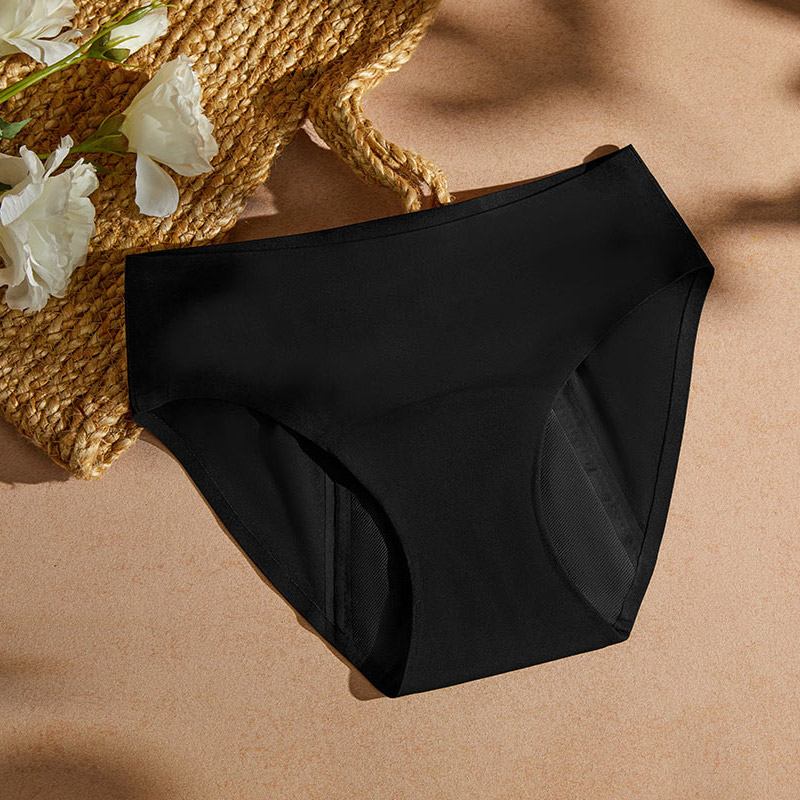
For example, the A1130 Four-Layer Absorbent Period Panties product page identifies a seamless mid-rise design, 85% polyamide and 15% elastane fabric, and an S–XXL size range. It is listed as available for OEM/ODM development.
How Should Buyers Choose the Right Absorbency Level?
For B2B buyers, selecting the right absorbency level involves more than choosing a milliliter number. Product positioning, target customers, material costs, garment fit, and testing requirements should all be considered during development.
Here are five practical points to evaluate before placing an OEM or private-label order:
- Define the target flow category. Decide whether the product is intended for spotting, light flow, moderate flow, heavy flow, or overnight use.
- Set a measurable capacity target. Specify the desired liquid volume and agree on how absorbency will be evaluated.
- Choose the gusset construction. Compare the number of layers, material weight, absorbent area, and barrier design.
- Evaluate comfort and fit. Check whether the added absorbent materials affect flexibility, thickness, and the fit of different sizes.
- Request product-specific test results. Verify that the test sample matches the final fabric, construction, and design intended for bulk production.
For brands targeting different consumer segments, developing several absorbency options within one collection can also help create a clearer product range. Light-flow products can focus on discreet everyday wear, while heavy-flow designs may require greater absorbent coverage and more extensive testing.
CHUANGRONG supports customized period underwear development for brands and retailers, including different fabrics, absorbent structures, sizes, labels, and packaging. Buyers can also explore reusable period underwear manufacturing options when planning a private-label collection.
Why Should Brands Work With an Experienced Period Underwear Manufacturer?
Developing reliable menstrual underwear requires coordination between fabric sourcing, pattern engineering, absorbent material selection, garment construction, and product testing. A manufacturer needs to understand how these elements work together rather than treating absorbency as an isolated specification.
CHUANGRONG Apparel was established in 2008 and is based in Gurao, Shantou, China. According to its company profile, the factory covers more than 20,000 square meters, employs over 500 skilled workers, and has an annual production capacity exceeding 30 million pieces.
Its product categories include women's bras, panties, seamless and cut-and-sewn lingerie, shapewear, and period underwear. The company provides OEM and ODM services, supporting product development from material and design selection to sampling and bulk manufacturing.
For brands building a menstrual underwear collection, this manufacturing support can help coordinate product specifications with the intended absorbency level, target market, and retail positioning.
Rather than relying on a general capacity claim, buyers should work with the manufacturer to establish a specific testing target for each product style and verify the final construction through sample evaluation.
FAQ About Period Underwear Absorbency
Period underwear commonly has advertised capacity ranges of approximately 5–50 ml or more, depending on the product design. Light-flow styles may target 5–15 ml, moderate-flow styles around 20–30 ml, and heavy-flow styles around 40–50 ml or higher. Actual performance must be verified through product-specific testing.
A 20 ml capacity is a liquid-volume measurement, not a universal tampon-equivalent rating. Tampon absorbency varies by product and regulatory classification. Brands should use the measured capacity in milliliters and clearly state the basis of any tampon-equivalent comparison.
Yes, some high-absorbency designs are developed for capacities around 50 ml or more. In CHUANGRONG's A1131 internal test, a size S sample showed no visible leakage at 52.25 ml, although its absorbent layer was saturated. Leakage occurred at 67 ml. These results apply only to the submitted sample and test conditions.
Four functional layers are a common product-development arrangement: a skin-contact layer, a liquid-distribution layer, an absorbent core, and a leak-resistant barrier. However, layer count alone does not establish absorbency. Material properties, construction, and testing results are equally important.
Period underwear can be used as a standalone menstrual product when its verified capacity matches the user's flow. It can also be used as backup protection with pads, tampons, or menstrual cups. Users should change the garment before it becomes saturated and follow the manufacturer's wearing and care instructions.
Final Thoughts: Is Higher Absorbency Always Better?
Higher absorbency is useful for consumers who need additional menstrual protection, but it should not be the only measure of product quality. Absorption speed, liquid retention, leakage resistance, gusset coverage, comfort, and fabric performance all contribute to the final product.
For brands and wholesale buyers, the most reliable approach is to define a measurable capacity target, select an appropriate absorbent construction, and verify performance through documented testing.
With OEM and ODM development support, CHUANGRONG Apparel helps lingerie brands and retailers explore customized period underwear designs for different absorbency requirements and market needs.
For product development inquiries, visit CHUANGRONG Apparel to discuss your period underwear manufacturing requirements.